伊豫豆比古命神社

Iyozuhiko-no-Mikoto Jinja(Camellia Jinja)

Iyozuhiko-no-Mikoto Jinja

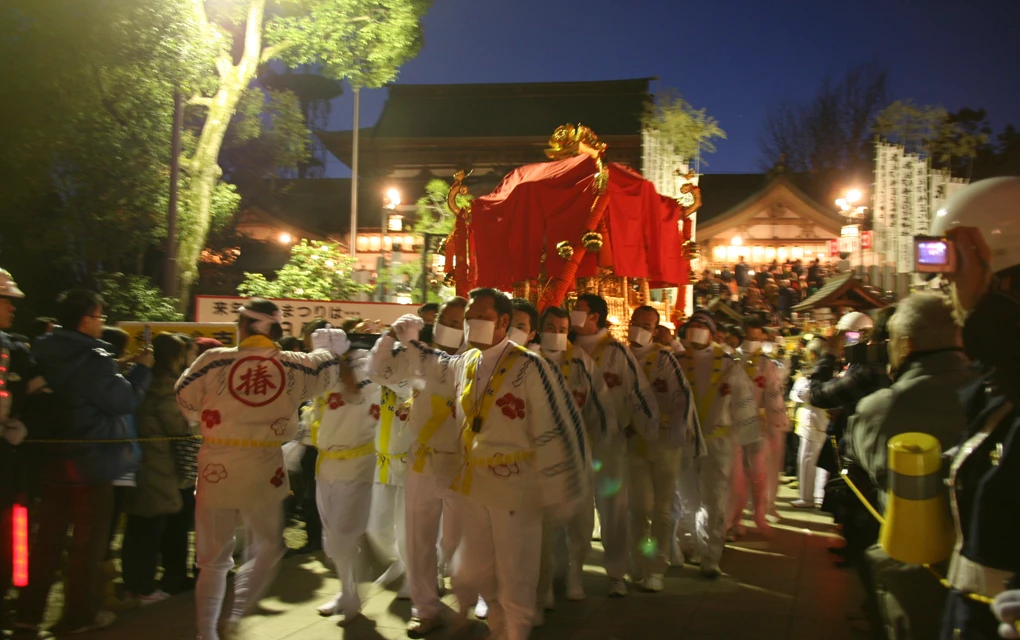
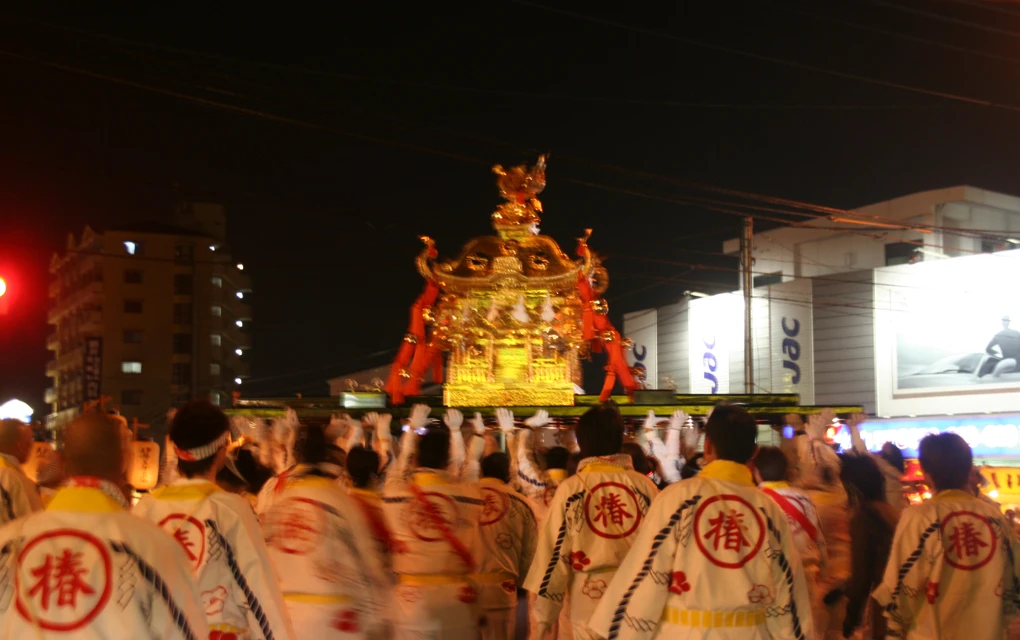
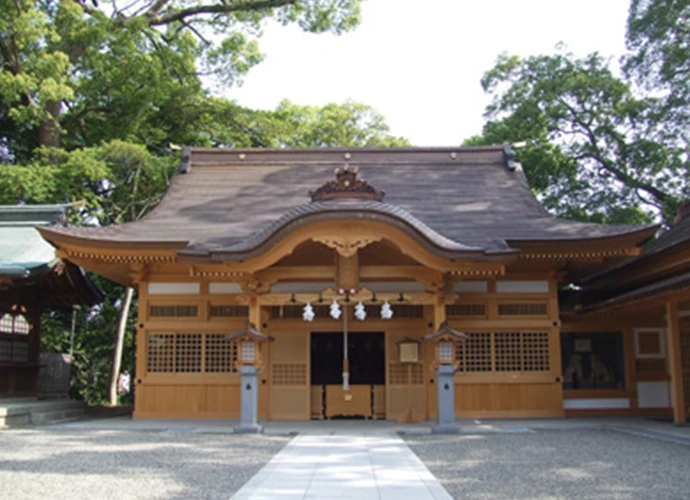
Iyozuhiko-no-Mikoto Jinja, commonly known as “Camellia Jinja” (“Tsubaki Jinja”, in Japanese), was established well over two thousand years ago. Since ancient times the kami of this jinja have been widely and reverently honoured for blessings of good fortune and business prosperity. The “Tsubaki Matsuri”, held on the seventh, eighth, and ninth days of the first month of the old lunar calendar (normally in February), is one of the largest festivals in Shikoku. It is a very lively festival, attended by over 500,000 people not just from Ehime Prefecture but from all over Japan.

The Name“Iyo”

“Iyo” is the old name for the region that is currently Ehime Prefecture, and it is recorded in the eighth-century Kojiki, the oldest history of Japan. The origin of the name is unclear, and some scholars have linked it to an old Japanese word for “flourishing”, while others have linked it to words for “hot springs” or “healing”.

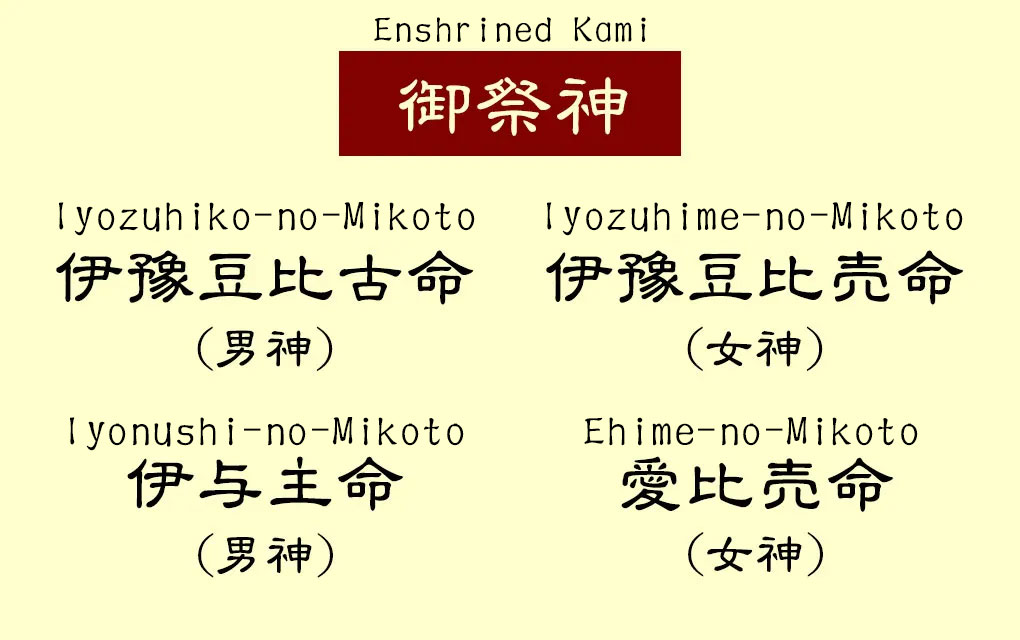
Enshrined Kami

“Iyozuhiko” means the ruling kami (hiko) of (zu) the land of hot springs (Iyo), and Iyozuhime is a title for his wife. Iyonushi-no-Mikoto is mentioned in a ninth-century document as being the first ruler of the local area, appointed by the Tennō (Emperor) around the second century. “Iyonushi” means lord (nushi) of Iyo, and the name is said to have been used because the hot springs at Dōgo Onsen were within his domain. The central government of that period had a political need to bring this region under its control, as it was important both as a fertile area, and as the site of hot springs that were significant to the Imperial court. “Ehime” appears as the name of a kami of this region in eight-century documents, and may mean “beautiful woman”, “first woman”, or “good woman”. It is the modern name of the prefecture where this jinja is found.
There are several theories about these kami. One is that Iyozuhiko-no-Mikoto and Iyonushi-no-Mikoto are different names for the same kami, while another is that Iyozuhiko-no-Mikoto is the ancestral kami, and Iyonushi-no-Mikoto a name for his successor. If Iyozuhiko-no-Mikoto was the ancestral kami of the original inhabitants of this region, and he was enshrined as the kami of the land by Iyonushi-no-Mikoto when he became the local governor, then this pattern of harmony and assimilation between the original inhabitants and newcomers is one that is found in many ancient legends.
Iyozuhiko-no-Mikoto is also mentioned in an ancient myth from the area around Kobe. A hill called “Helmet Hill” is said to be Iyozuhiko-no-Mikoto’s helmet, dropped when he was battling another kami. This shows that Iyozuhiko-no-Mikoto was known and respected as far away as Kobe in a very early period.

Camellias and the Camellia Festival

It is not clear when this jinja and its festival were first called “Camellia Jinja” and “Camellia Festival” (“Tsubaki Matsuri”, in Japanese). The camellia has been a part of Japanese life since ancient times, and the name may have become attached to the festival because it was held amid the cold winds of the season when the camellias start to bloom. Below those blossoming trees, people bartered for goods, and the camellias that could commonly be seen in groves throughout the region may have given their name to the jinja. As camellia bloom around the end of winter, they give people a sense of good fortune for the new year, and so this name, short and easy to remember, may have stuck as the common name for both the jinja and the festival.
Camellias
In an eighth century history of Japan, it is said that when an early Tenno, Keiko, was pacifying the Kumaso in Kyushu, he had hammers made from camellia wood, and with them brought his enemies under his control. Since that time, the camellia has been regarded as fortunate and a ward against evil, and the elderly and monks made canes from it. There are also references to it being used in court ceremonies.
Camellias are also mentioned in a poem from the eighth-century Man’yoshu collection, where they are compared to beautiful young women, and it shows that they were deliberately cultivated.
Around the eleventh century, they were an essential part of court ceremonies to ward off evil at the beginning of the year, and camellia oil was important day to day, used as a cosmetic by both men and women. The resilience of the tree also made it a symbol of long life. We can imagine that this wide range of uses led people to see the camellia as holding a sacred power, and to entrust their wishes to it.
The Camellia Festival
The festival is held over three days, the seventh, eighth, and ninth of the first month of the old lunisolar calendar. The festival is held on the days around the waxing half-moon nearest February 3rd or 4th, the official beginning of spring. It is known as “Tsubaki Matsuri”, “O-Tsubaki-san”, or “The Festival that brings spring to Iyo”. It is supported by the fervent devotion of people not just from Ehime Prefecture, but from Hokkaido in the far north to Kyushu in the southwest.
This spring festival is now the largest in the region around Matsuyama, with about 500,000 attendees from across the country. Indeed, it is one of the largest festivals in the whole of Shikoku, and it gets bigger every year, with stands lining the road outside the precincts.

Tsubaki Matsuri Ceremonies

Date Time Ceremony Unique Ceremonies
7th Midnight Opening the Gates  
8th 9 am Spring Grand Matsuri  
  6 pm Departure Ceremony Stealthy Procession
  6:30 pm Leaving the Jinja  
  8 pm Destination Ceremony Welcoming Fires
  9 pm Return to the Jinja  
9th 9 pm Return Ceremony  
  Midnight Closing the Gates  

Unique Ceremonies

Coin Loan Ceremony

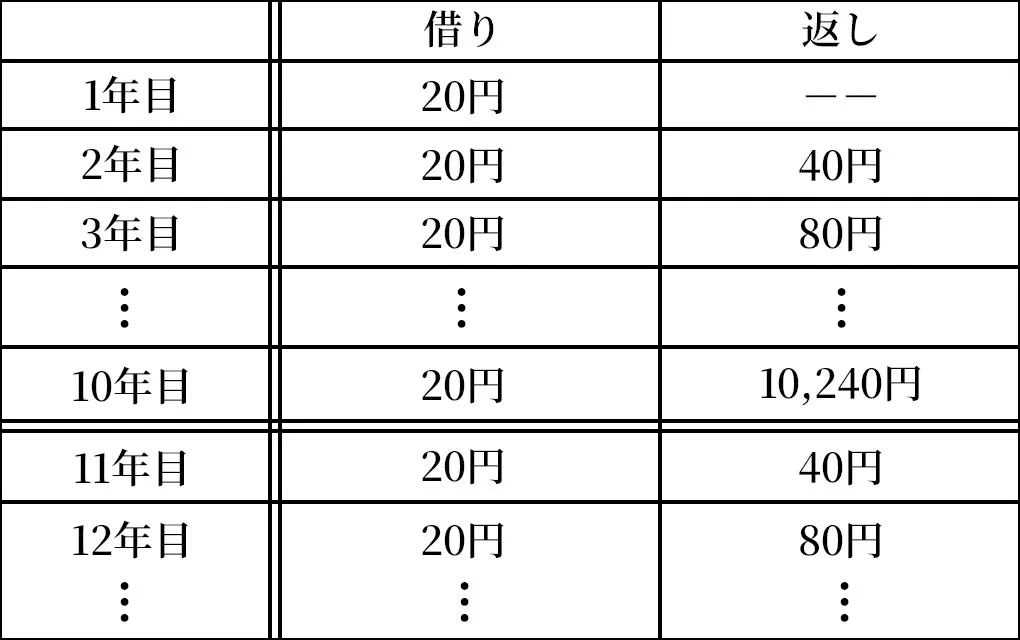
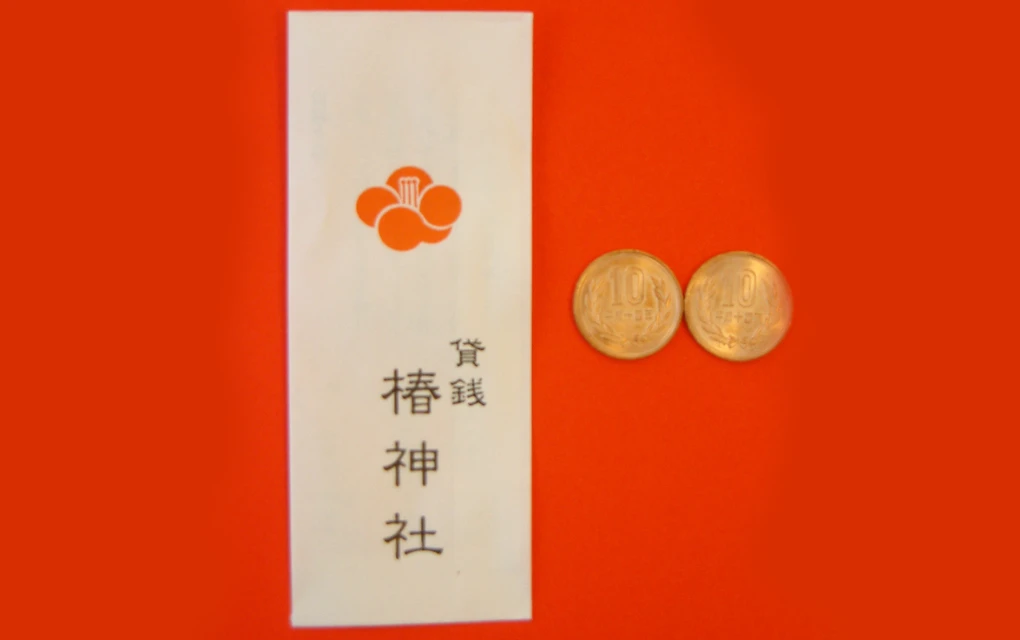
In this ceremony, people borrow a small amount of money (¥20) from the jinja, and the following year return twice as much. The jinja does not ask for a name or address when someone borrows money, so anyone can borrow the money without any conditions. This ceremony is one of trust and faith between the kami and the people, and is a prayer that one’s life will go so well that one can repay much more (symbolically, twice as much) the following year. Traditionally, people borrow ¥20 every year, but double the repayment every year for ten years, repaying ¥10,240 in the tenth year, before resetting to repay ¥40 in the eleventh. This custom may have evolved from an older practice of throwing money into the crowd.

Stealthy Procession

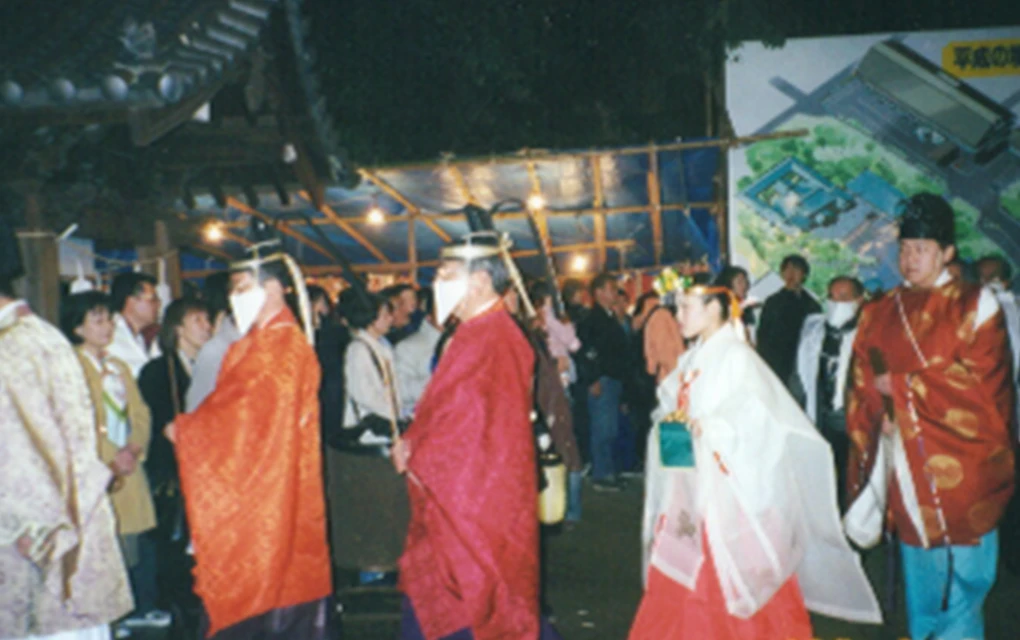
In the evening of the middle day of the Tsubaki Matsuri, when the largest number of people fill the precincts and crowd it with their energy, the enshrined kami are transferred to a mikoshi, a sacred palanquin, and taken in procession to Kotohira Jinja. However, between the sanctuaries and the tower gate, the people carrying the mikoshi do not call out, and do not shake it in any direction. Instead, they carry it in silence, calmly. Because it seems as though the kami are trying to sneak out of the jinja, this is called the “Stealthy Procession” (“O-Shinobi Togyo”, in Japanese).
The gold-plated mikoshi glitters in the light of the lanterns carried by those accompanying it as it moves quietly forward, creating a solemn scene as if from another world, and the great crowds of people in the precincts naturally fall silent to watch the mikoshi leave. There are many theories and popular explanations for why the ceremony is performed this way, but no-one really knows.

Welcoming Fires

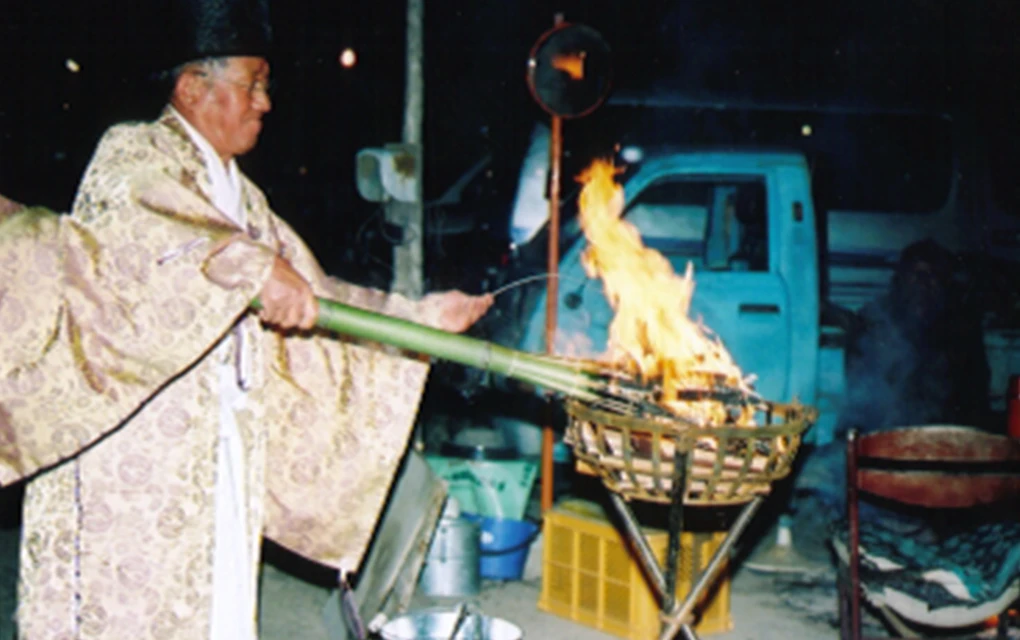
These are called “Awasebi” in Japanese. The people living in houses along the route taken by the mikoshi take the straw decorations that they hung at their doors at new year, and burn them by their gates as fires to welcome the mikoshi as it passes.

Legends of Locations

Funayama

This means “Ship Mountain”. The legend says that when Izukohiko-no-mikoto brought his ship to this place, beside the harbour, the kami of the local land, Shionarutagutsuna-no-okina-kami, appeared as an old man to welcome him, and tied the rope from the stern of his ship to the tip of the rock here. Thus, it was called “Funayama”.

Sayabuchi

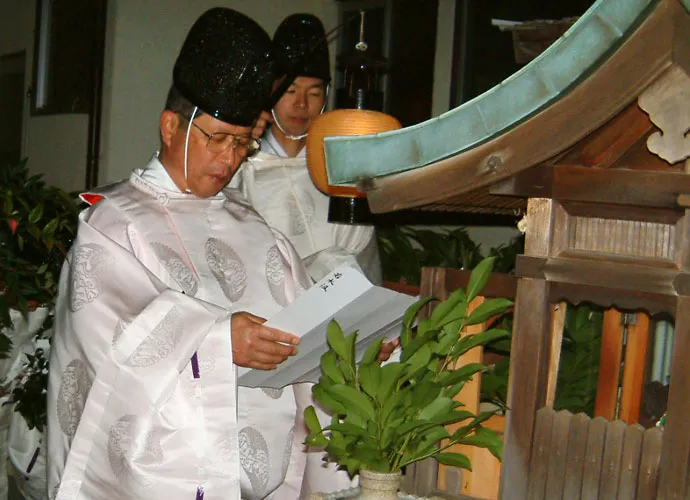
This means “Source of Clear Water”. Every year, the “Wakamizukumi” (“drawing of water of youth”) ceremony is held at 2 am on New Year’s Day. The chief priest comes to Sayabuchi and draws water from the spring, returning to the jinja to offer it before the kami. That water remains pure for the whole year.
Other local areas have similar names. The broad area where the jinja’s parishioners live is called “Ishii”, which means “spring with many stones”, and the name of the immediate area where the jinja itself is sited is “Iai”, which is said to mean “abundant spring”. This area often suffers from drought, and so the areas seem to have been named in praise of the few springs that there are.

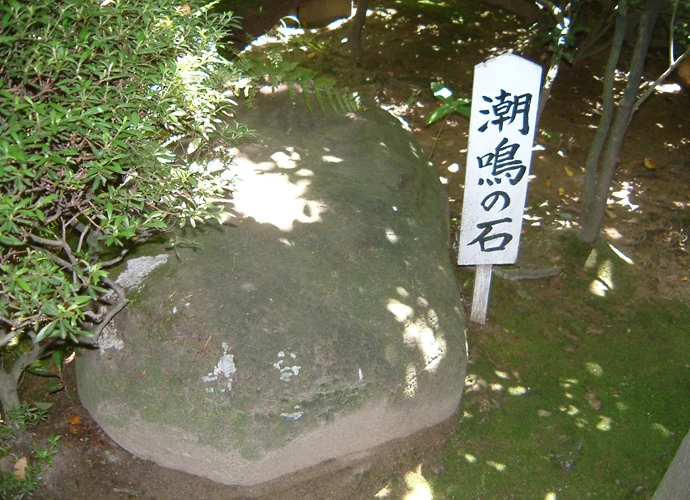
Shionaru-no-Ishi

●This name means “Rock of the Tide’s Cry”. It is said that if you strike this rock and put your ear to it, you can hear the sound of the tide crashing on the shore. Until a few decades ago, people used to offer uncooked rice here, and it was said that chewing that rice was a cure for toothache. This rock is granite, which is unusual in this area, and it is thought that it may have been the site of ancient ceremonies.

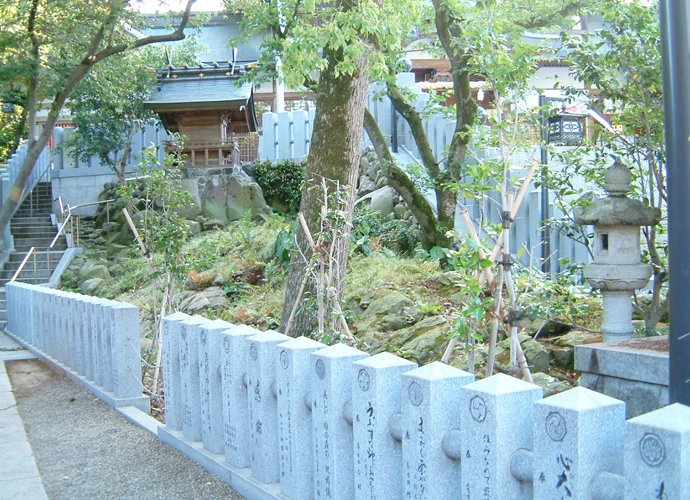
Shime-ishi

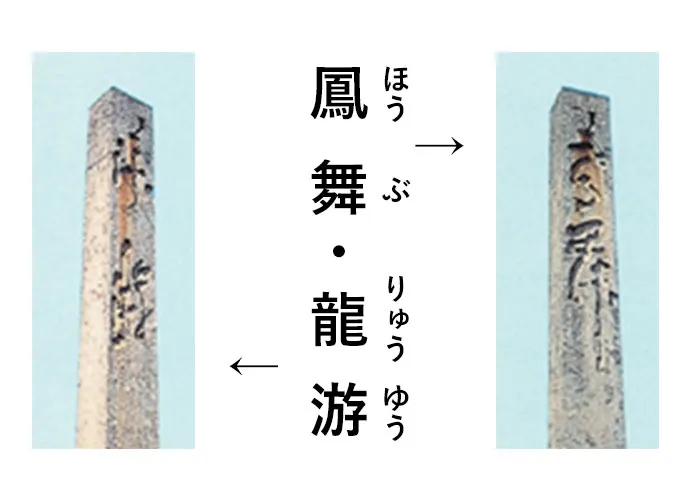
This monument is south of the jinja, at a resting place for the mikoshi.
The writing on it is said to be one of the greatest works of Miwada Beizan (1821–1908), a priest and calligrapher. Beizan perfected his skill through independent study and intensive practice, and thanks to his his superlative aesthetic sense he left unmannered and natural calligraphy with a form and rhythm all its own.
Beizan’s works, through their respect for tradition and perfect self-expression, are said to be an epitome of this art.

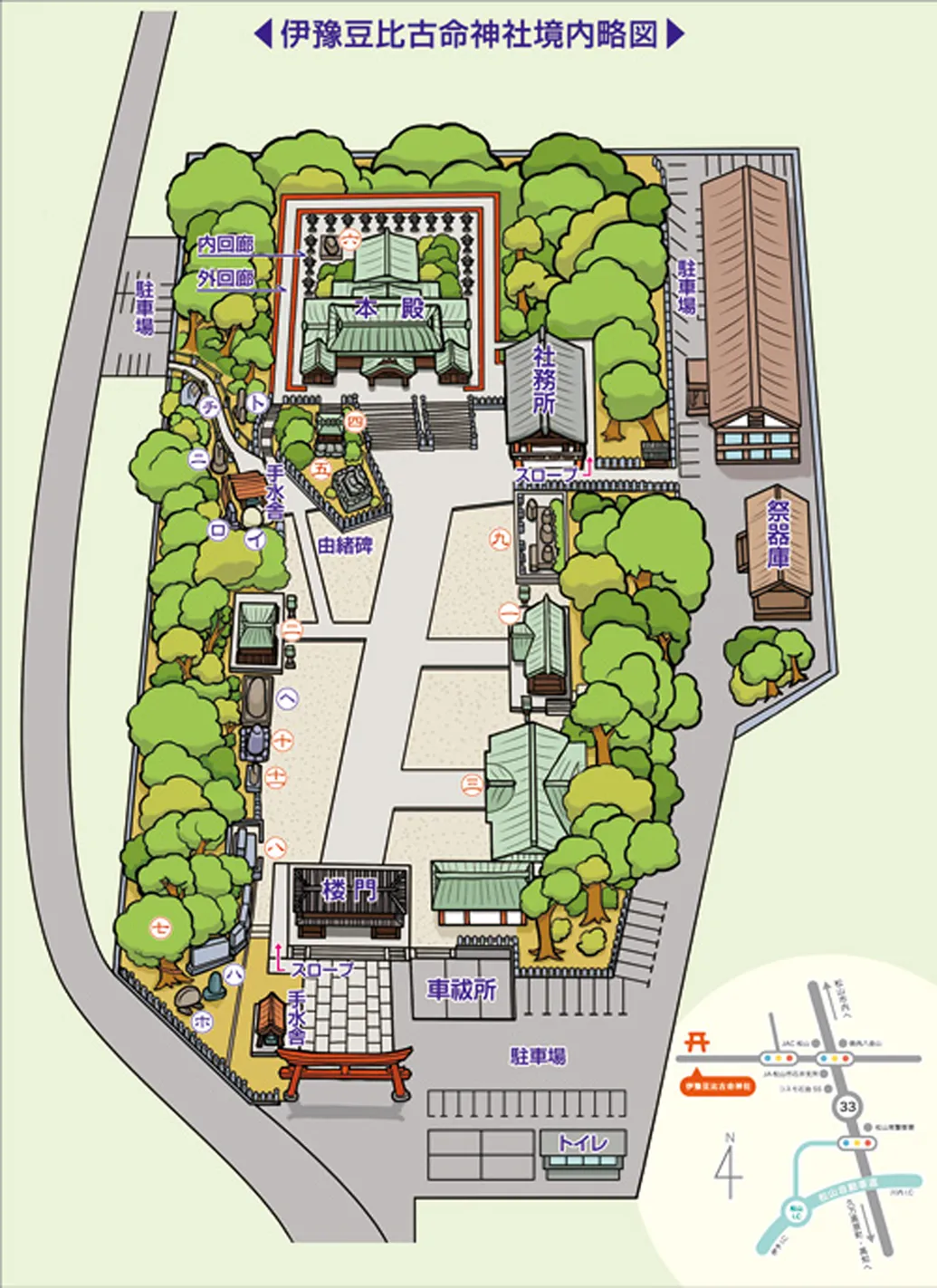
Precincts Map

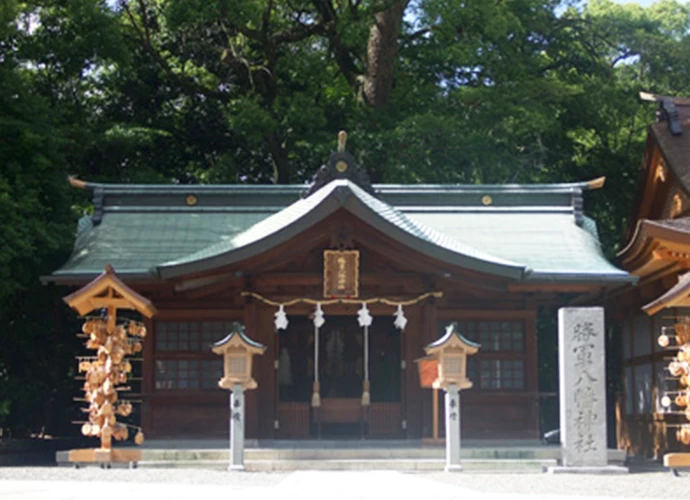
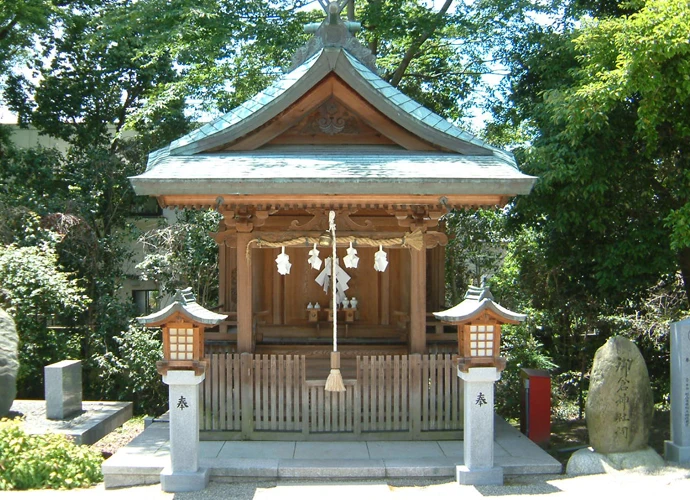
■Kachi-ikusa (“Victorious Army”) Hachiman Jinja
■Enshrined Kami
Hondawake-no-mikoto
■Notes
The name refers to the victory over the attempted Mongol invasion of Japan in the thirteenth century
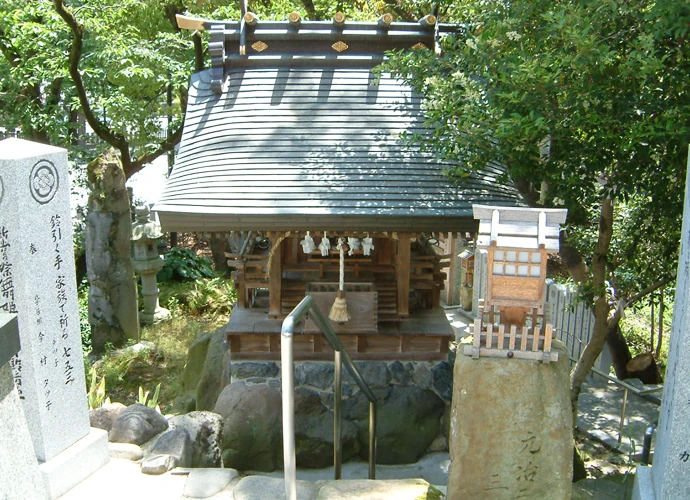
■Mikura (“Sacred Storehouse”) Jinja
■Enshrined Kami
Ukanomitama-no-kami
■Notes
The kami of Iai village. A kami venerated at Inari jinja, and a kami of rice
■Komori (“Child Protecting”) Jinja
■Enshrined Kami
Amenomikumari-no-mikoto(A kami who grants water)
Konohanasakuyahime-no-mikoto(Kami of safe childbirth and nursing)
■Sojasha
■Enshrined Kami
Shionarutagutsuna-no-okina-no-kami
■Notes
Based on the legend of Funayama, people visiting the jinja would traditionally pay their respects at this jinja first, asking the kami of this jinja to take their requests to the kami of the main jinja.
■Funayama
■Notes
(See the previous page
■Shionaru-no-Ishi
■Notes
See the previous page
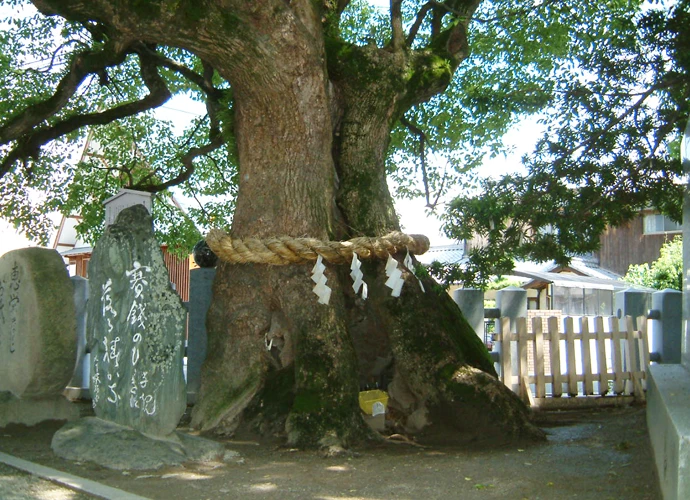
■Furukusu (Old Camphor)
■Notes
According to local tradition, a female tanuki familiarly known as “Obeni-san” lives in this old camphor tree. This is one of many tanuki tales from Ehime Prefecture.
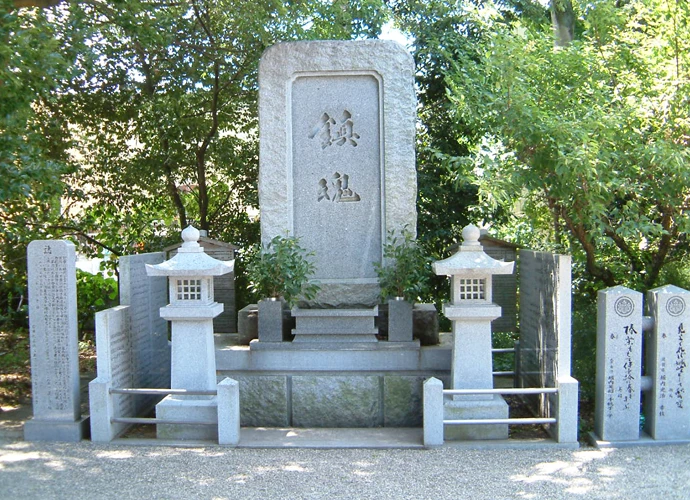
■Chinkonhi (War Memorial)
■Notes
In memory of the war dead from the Ishii district.
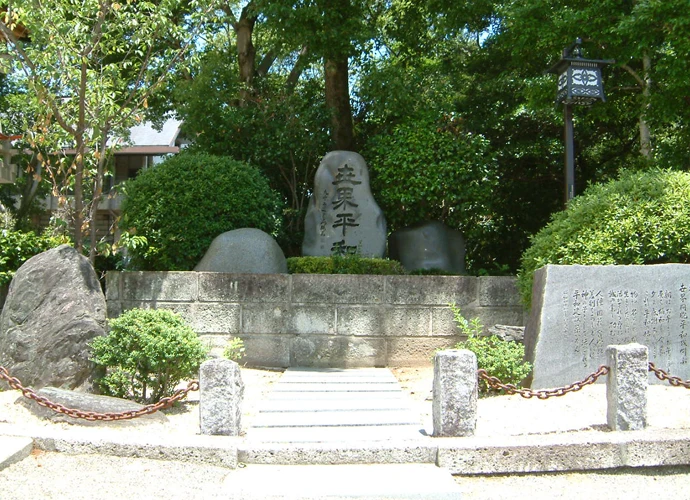
■Sekaiheiwahi
■Notes
A monument praying for world peace.
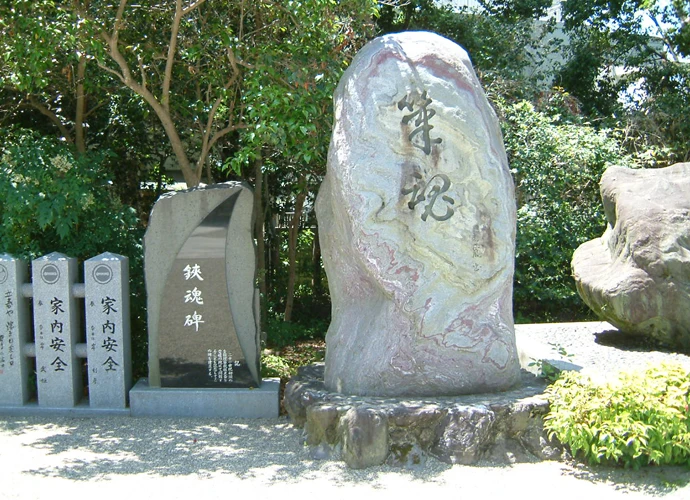
■Hikkonhi
■Notes
Every year, writing brushes of all sizes and kinds that have been used and finished with are offered here. The name means “Writing Brush Spirit Monument”.
■Kyokonhi
■Notes
The spirits of scissors are honoured and pacified at this monument.
■Poem Monuments
■Notes
There are also eight monuments around the precincts inscribed with poems by different authors.